
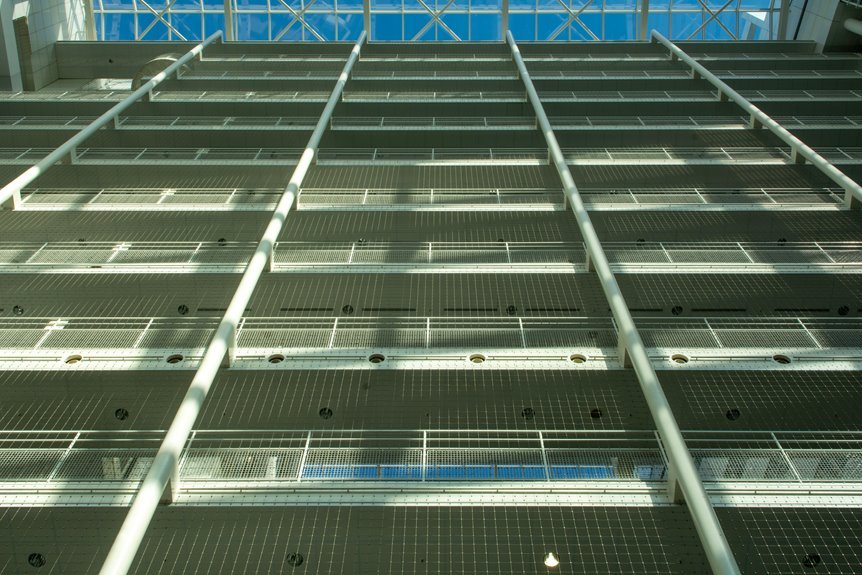
Flyarchitecturenet Inside the Home translates insect-inspired systems into domestic scale. Lightweight modules form breathable spaces, their walls and ceilings capable of reconfiguration. Micro-structured vents and perforated skins choreograph air, shade, and acoustics with precision. Sliding partitions, adaptable floors, and latticed skins create a sequence of light corridors and climate paths. The approach promises retrofit kits for constrained volumes, yet the exact orchestration—how segments harmonize under daily use—remains unspoken, inviting further scrutiny of practical integration.
Flyarchitecturenet Inside the Home
In the interior, the Flyarchitecturenet reveals its core logic: a network of moved lines and anchored nodes that define space through flow, adjacency, and materiality.
The scheme is insect inspired, translating micro-scale agility into room forms.
Breathable design threads air and light, energy efficient circuits guide circulation, and living spaces manifest dynamic, responsive spaces within constrained volumes.
Lightweight, Adaptable Structures You Can Use Now
Lightweight, adaptable structures present immediate practicality through modularity and responsive materials.
The rendering emphasizes lightweight structures, crisp joinery, and reaction to space—walls that slide, ceilings that breathe, floors that rearrange.
Adaptable homes emerge as breathable interiors with insect inspired design cues guiding mesh, perforation, and shade.
Precision diagrams map usage, durability, and freedom within compact, flexible footprints.
Insect-Inspired Design for Breathable, Energy-Efficient Living
Insect-inspired design streamlines airflow and shading through micro-structured vents, perforated skins, and responsive lattices that weave transparency with enclosure.
The narration presents fly inspired channels, shadow maps, and air-path hierarchies, emphasizing breathable design and energy efficient living.
Lightweight structures enable adaptable homes, while retrofit techniques enable tiny modularity, scalable components, and precise assembly toward freedom through architectural clarity and tactile, diagrammatic material emphasis.
Retrofit, Tech, and Tiny Masters: Practical Implementation Steps
How can retrofit practice translate insect-inspired efficiency into tangible, modular steps for homes? Precise diagrams map airflow, structure, and light corridors, revealing scalable modules. Retrofit strategies emphasize adaptable junctions, breathable materials, and durable surfaces. Tiny masters—compact systems—optimize energy, climate, and acoustics with repeatable kits. Insect inspired design guides spatial storytelling, enabling freedom through clear, modular, implementable steps.
Frequently Asked Questions
What Is Flyarchitecturenet’s Core Safety Protocol?
The core safety is maintained by rigorous risk assessment, redundancy, and monitoring; installation legality governs all procedures. This protocol emphasizes precise diagrams, spatial storytelling, and material emphasis, ensuring a freedom-loving audience understands compliance, safeguards, and resilient, lawful deployment.
Can It Be Legally Installed in Rental Properties?
The answer hinges on legal considerations; rental properties may restrict modifications, affecting tenant rights. It cannot fulfill request universally. Allusion suggests balance between access and privacy, while diagrams emphasize compliance, materials, and space, guiding freedom toward lawful installation in context.
How Long Does Installation Take for a Typical Home?
Installation duration varies by home layout and system complexity, averaging several hours to a full day; factors include wall access, cable routing, and power provisioning. The assessment notes homeowner compatibility with existing infrastructure and scheduling constraints.
What Maintenance Does It Require Over Time?
Maintenance requires a defined schedule, with routine inspections, filter checks, and component reseating to sustain long term reliability. The approach emphasizes precise diagrams, spatial storytelling, and material emphasis, appealing to readers who value freedom and clear conditions.
Is Professional Certification Required for Installers?
Professional certification is not universally required for installers; however, it strengthens credibility. Installer liability remains a consideration, with certified practitioners typically handling risk more transparently. The approach emphasizes precise diagrams, spatial storytelling, and material emphasis for freedom-loving audiences.
Conclusion
Flyarchitecturenet Inside the Home culminates as a precise diagram of adaptable living. Breathing interiors emerge from modular units: sliding walls, perforated skins, micro-vents, and responsive lattices that choreograph light, air, and shade. An interesting stat underscores efficiency: energy use can drop by up to 30% with optimized airflow paths in retrofit kits. The narrative remains spatially grounded—materials, joints, and scales read like a technical storyboard, where each element translates into a breathable, energy-aware room.
