
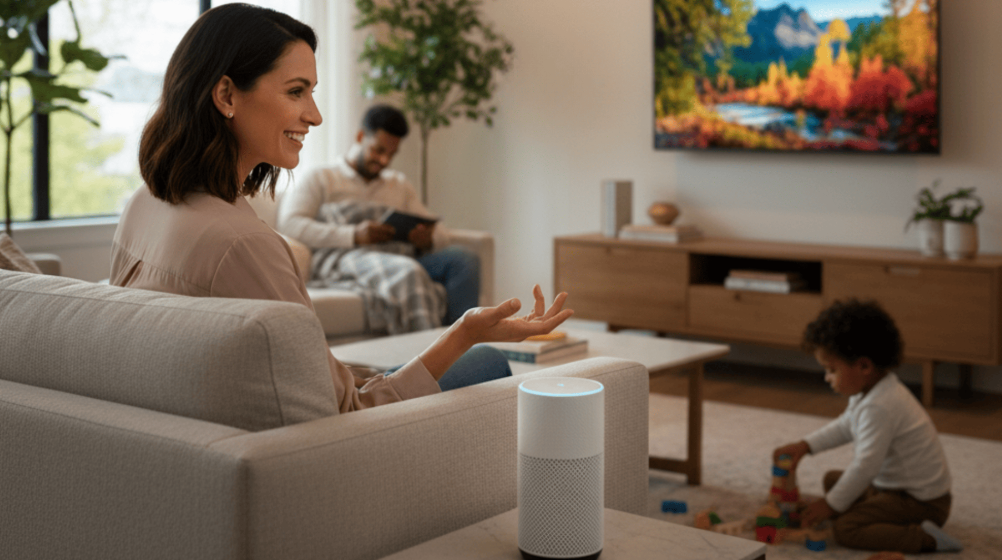
Voice-controlled homes promise convenience and efficiency, but they also raise privacy and security questions. Devices rely on cloud services, data collection, and ongoing updates, which can create vulnerabilities or vendor dependencies. Benefits are real—hands-free control, faster information, and streamlined routines—but reliability varies by device and network. The debate centers on whether the ease is worth the trade-offs, and what safeguards, policies, and choices actually reduce risk. Consider what matters most before committing further.
What a Voice-Controlled Home Is and Isn’t
A voice-controlled home is a network of smart devices that responds to spoken commands, facilitating tasks such as adjusting lighting, playing music, or setting reminders without physical interaction.
The concept spans Voice control, privacy tradeoffs, and Innovation adoption, yet consistency varies.
Clarity emerges from explicit compatibility quirks and measured skepticism about surveillance, while freedom-seeking users demand transparent, interoperable ecosystems.
See also: Connecting Technology People Trychitter
The Top Benefits You’ll Experience at Home
Voice-controlled homes offer tangible daily conveniences by automating routine tasks and enabling hands-free control.
The top benefits include streamlined routines, reduced cognitive load, and faster access to information, supporting independent living.
Yet consumers should consider privacy concerns and device interoperability, questioning long-term reliance and security coherence.
Common Drawbacks and How to Mitigate Them
Common drawbacks in voice-controlled homes center on privacy, reliability, and interoperability. The risks include privacy concerns and data retention practices, which may reveal sensitive patterns without user consent. Reliability varies by device and network, causing interrupted commands and frustration. Interoperability challenges hinder seamless control across platforms. Mitigation relies on transparent policies, local processing options, and clear user controls to preserve freedom and oversight.
Smart Setup, Security, and Smart Budget Tips
Smart setup, robust security, and prudent budgeting are essential for reliable voice-enabled homes. A detached review notes straightforward device pairing, minimal latency, and transparent data flows, but warns of vendor lock-in. Emphasize privacy safeguards, firmware updates, and routine audits.
Smart budgeting requires cost awareness, feature prioritization, and scalable plans. Freedom hinges on controllable ecosystems, auditable practices, and measured adoption of smart budgeting strategies.
Frequently Asked Questions
How Do Voice Assistants Handle Multiple Languages at Once?
Multi language support relies on multilingual models and seamless context switching; cross language commands may be interpreted, but accuracy varies. The system often defaults to a primary language, risking misinterpretation if accents or mixed usage occur. Skeptically, users maintain fallback options.
Can Voice Technology Improve Accessibility for Elderly or Disabled Users?
Voice technology can improve accessibility for elderly or disabled users, but benefits depend on inclusive design and user testing. Accessibility benefits exist, yet design challenges persist, requiring skepticism about universal applicability while preserving user autonomy and practical freedom.
What Privacy Controls Come With Ongoing Voice Data Collection?
Privacy controls exist, but skepticism remains: ongoing voice data collection often involves data retention policies, consent toggles, and deletion requests, yet ambiguous terms persist. The audience seeking freedom should scrutinize settings, minimize sharing, and demand transparent data governance.
Do Voice Systems Require Ongoing Internet Connectivity to Function?
Yes, not always; some systems work offline. The analysis notes Hashed privacy, Offline reliability, Local processing, and Data minimization as ways to preserve autonomy while internet dependence may vary by device and configuration. Skeptically, freedom remains contingent.
How Do Voice Assistants Integrate With Non-Smart Household Devices?
Voice assistants integrate with non-smart devices via hubs or bridges, enabling control while skeptical users question reliability; they can automate routines, though consistency varies, and one must consider privacy. This approach avoids constant console dependence, turning consoles off when possible.
Conclusion
A cautious conclusion closes with clarity: a connected home charms, yet challenges chisel away at calm. Privacy, portability, and potential vendor lock-in warrant wary watching; transparency, local processing, and timely updates temper temptations. Reliability remains regulatory roads to cross, especially regarding data retention and cross-platform compatibility. Pragmatic households weigh convenience against confidentiality, opting for conscious control. Balanced benefits bloom when boundaries are baked in, bandwidth is bounded, and bright, brief briefings bolster informed, intentional living. Alliteration aids awareness, advising aware, adaptable autonomy.
